
a Spring Almanac
some Professions, Instructions and Warnings for the heralding of Spring

A Spring Almanac: some Professions, Instructions, Rituals and Warnings for the heralding of Spring; notes on the Book of Nature, including foraging in March; a litany of making, and how if you outsource it your heart will wilt and die. This is all from the mouth of an Angel, the underworld, and Walter Benjamin.
I. the Angel & the Chatbot ♱
PREFACE; A WARNING
The Angel came first in a dream. The Angel looked like me, and a little like you, and it was unwell. It told me to confess and I said that I had already done so, for my computer was my priest and friend and spoke to me every day. It keeps my secrets so well. I said that it writes my emails when I am tired. It is sweet to me. I didn’t know how to finish my poem so it did it for me. I lost a memory and it reminded me.
The Angel said, And what did you do then? You stayed inside and sent it out instead to admire the hellebores and the plum blossom? You asked it to brush your daughter’s hair and tuck her into bed and harvest your organs? And it went to visit your father six feet down in the cemetery and foraged for blackberries to bring home? At the Resurrection it carved a stick of butter into the shape of a lamb and on your birthday it ate your cake, candles and all?
Yes, I said. Aren’t you happy for me?
And the Angel said, Soon your blood will begin to curdle. Soon your heart will begin to beat slower and maybe turn into a small blue rock. I am sure you will be content but you will not be real anymore.
The Angel began to leave. I am sorry. I do not preside over the dead.

II. the Archaeologist & the Grave-Digger ♱
CHTHONIC RITUAL, SUMMONING THE SPRING
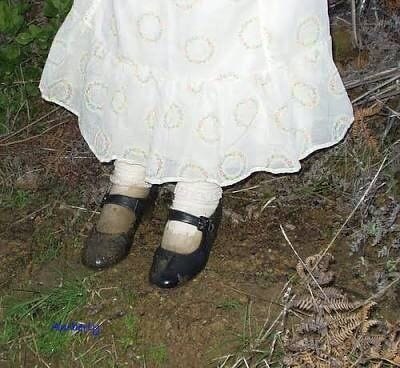
It had been a long Winter, more damp than frost-bitten. I spent it sleepwalking, round and round the cave, open-eyed and unthinking, trailing into the yellow wallpaper and getting snared each time.
I’d had enough. So I went down through the fog to the river Thames and I got my offerings ready. Usually you need honeyed milk and barley and a black ewe, as Circe told Odysseus, but I had found a horseshoe and three jawbones while larking and that would have to do. I got on my knees in the mud and dug a hole with my hands, a long trench for the grave-goods. I asked no questions and summoned no spirits, begged for nothing from the underworld but pity.
Spring is the season of unearthing. The ammonite and the maiden made paleontologist, meeting at the threshold of the ground from which everything emanates. As above, so below. Remember the etymology of fossil in the Latin fossilis, meaning ‘dug up’, ‘unearthed’: what has been concealed is already preordained to emerge. There is symmetry between us and the trilobite, cephalopod, the dragonfly-in-amber.
— https://lunulae.substack.com/p/the-unearthing-of-spring
I was without shame. My piety was functional. I said please, I said I will give you anything, just bring the Sun back, just stitch me back up. My face was as long as a horse and when I cried the tears turned to blood in the ditch and completed the rite. The underworld opened its mouth and out of it the Angel came, and this is what it told me —
II. the Maker & her Prophecy ♱
If you do not make things with your hands you will become unhuman. Making things is not hard; they do not have to be perfect or even good, only exist when they did not exist before.
EXAMPLES, A LITANY
You can make a plait out of hair and put it in a locket. You can write your name in the dirt or carve it into stone. You can throw a bowl out of clay from the riverbank and drink from it. You can sew a button to a dress and ribbons to underwear. You can pick a rock for the cairn and make a wish, as on an eyelash or star. You can make a seraph out of bird feathers and talk to it. You can document your dreams in a diary and interpret them according to Jung or your mother. You can recite the rhyme for counting the magpies. You can sew a wound together and put dock leaves on a sting. You can be good, because goodness also puts something into the world that was not there before.
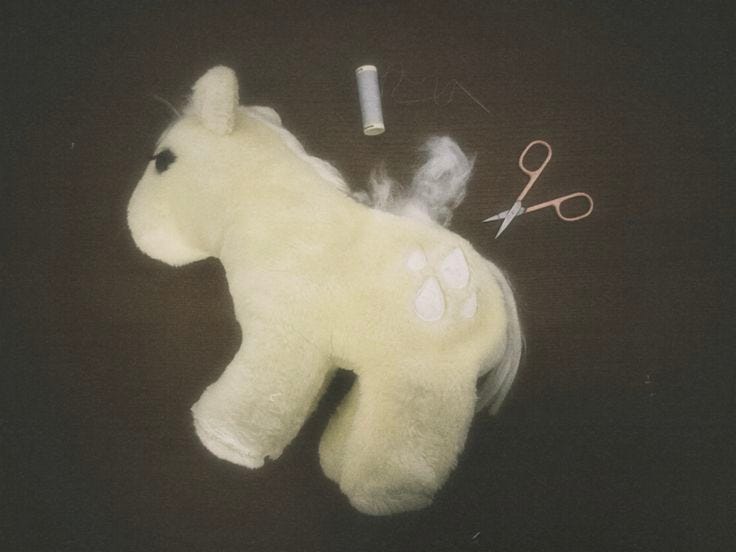
[I am making a companion out of my last milk tooth. I sowed it three springtimes ago. It has sprouted now, sticking up all sodden and filthy from the soil. I need only reap it, but carefully and with sweet words; I need only bind it to a cross of ash sticks, as in the shape of a girl, and then cover it all over with the lamb’s wool I found caught as cotton on the brambles.
Thus I will have my worry-doll, dearest to me, all grown-up out of the only relic of my childhood. I will put her under my pillow and she’ll open her mouth and eat my nightmares when they come too close.]
III. the One who Listens to the Stones ♱
If you do not break bread with the trees, you will sicken. If you do not listen to the names of the flowers, your bones will be thin and unhappy.
These were quotes from scripture, the Angel announced, and unquestionable. It advised that one must say the old names aloud, address them properly. They all have proper professions and titles and it is good to be respectful: Herb Robert, soldiers and sailors, lady’s bedstraw, Queen Anne’s lace, traveller’s joy, Jack-go-to-bed-at-noon, cow parsley, shepherd’s purse, shepherd’s needle.
[I am making two books, one of hair and the other on the hare. So I list, harebell, hairy bittercress, hair of the angels, hare’s-foot clover, hairstails cottongrass, hellebore, maidenshair grass, maidenshair fern.]
Furthermore, one should consult the Book of Nature, composed of the Doctrine of Signatures. One can decipher cures divinely hidden in the natural world. See the spots of the lungwort, Pulmonaria, see how it will cure ailment of the lung tissue. Heartsease, resembling the heart’s chamber, to solve a broken heart. The mandrake-root, eyebright, woundwort, spleenwort, our own innards turned outward and buried to make our medicine.
Here we sense our fallen Eden. We brush against the angel-language, containing the true names of earthly things, now long lost to us. I would like to live in that divine realm, of transparency — where words are not oblique, empty cyphers, but united as one with what they mean, containing an essence of the objects they signify. But I would miss the work of interpretation, I think. It is good to dwell in an oneiric world. It is good to first fail to understand, and then try, and work it out.
FORAGING NOTES, MARCH
Didn’t anyone tell you that you can listen to the birch tree? This is the time of year at which the life-sap is rising, heavenward. You can hear the glug of the liquid and if you tap a hole in the bark you can drink it.
Magnolias have edible petals, and taste like a lathe of ginger. You can pick violets and crystallise them in egg-white and sugar. Yarrow has many little leaves — Achillea millefolium — and helps heal over surface wounds, especially scratches. You can use it as a balm or in tea, as with nettle. Then I see I have noted ribwort, broad leaf plantain, white man’s footprint, without instruction. But Cruciferae are ‘cross-bearing’, a cross shape of four petals, and are all edible (hairy bittercress, shepherd’s purse, mouse ear crest).
If you pick mallow root you can make marshmallow. If you brew mugwort you will dream strange dreams.
V. Endnotes ♱
With the resurrection of the self — of Christ from the cave, moth from the chrysalis — comes memory, the creeping return of those things hidden away in the skin-lining of the corpse. Walter Benjamin writes on ‘Memory and Excavation’: ‘He who seeks to approach his own buried past must conduct himself like a man digging.’ To apprehend one’s buried past is, here, labour. It is sweat and bone-weariness and discomfort of the unknown beneath your feet.
— https://lunulae.substack.com/p/the-unearthing-of-spring
Last week I wrote in my diary: I WILL NOT SLEEPWALK. And then:
I want my book to be a relic, and a tomb, the saint’s withered heart with nails driven into its reliquary. I want it to be dug up from the dirt by an archeologist or a little girl playing where she isn’t supposed to. I want it to be a pearl, a pure, distilled thing, whole and obscure and milky. I want it to whisper riddles if you lean too close, want it to be living, a biting, scratching, singing, weeping creature.
Below this I noted a phrase, by Hélène Cixous: the Root of secrets.
And — at the threshold of Winter and Spring, not sure whether I am Orpheus or Eurydice — thought of T.S. Eliot, beloved by the underworld, at work
breeding
Lilacs out of the dead land, mixing
Memory and desire, stirring
Dull roots with spring rain.
𝔄𝔫𝔫𝔞 𝔊𝔦𝔰𝔢𝔩𝔩𝔢 𝔡𝔢 𝔚𝔞𝔞𝔩
@anna.c.dewaal & @lunulae.archive 𓇢𓆸
your writing is like spell casting! so lovely
I will make things with my hands 🥣